
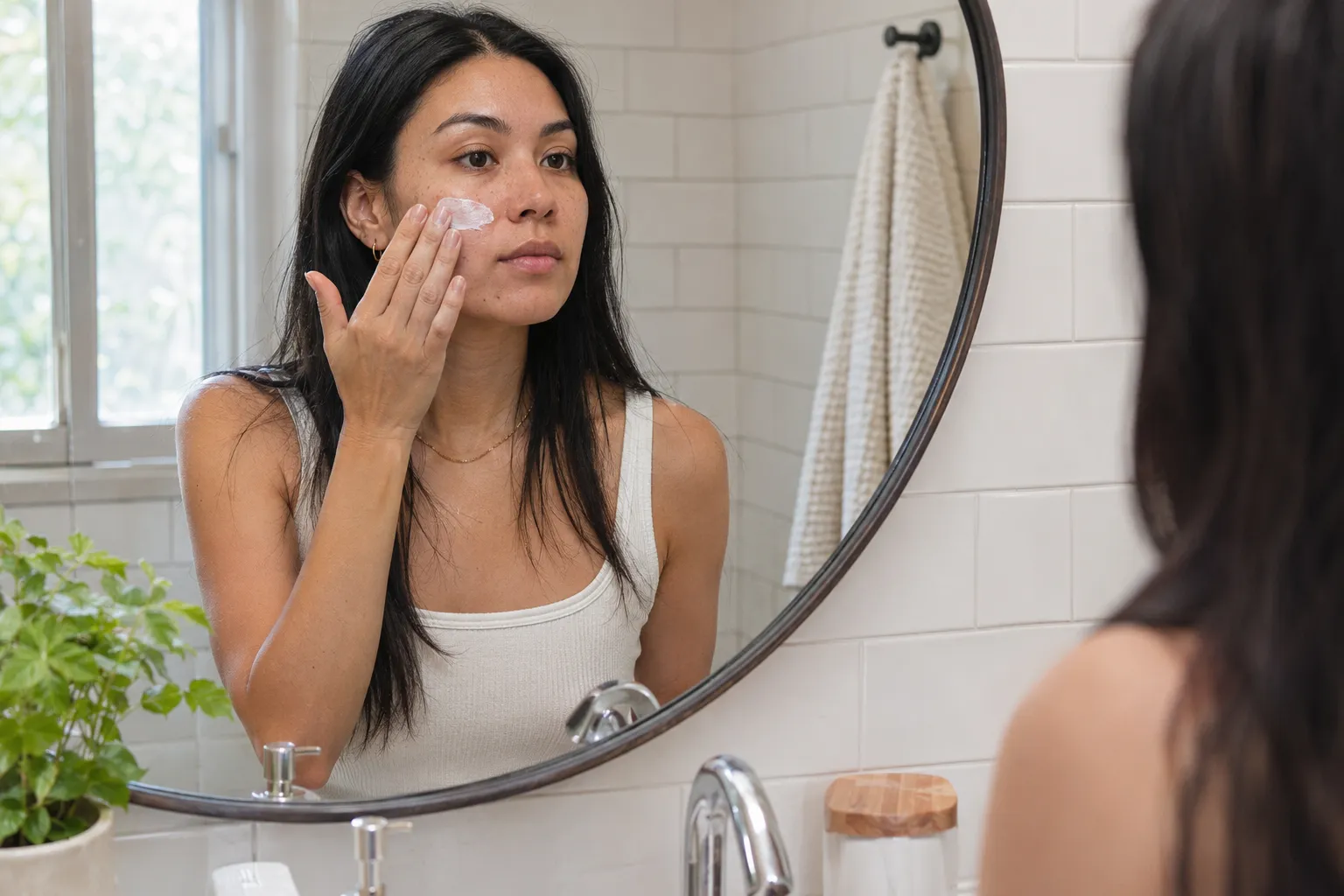
Sunscreen counts as anti-aging care only when it is worn every day and used as directed. That is the standard this article applies, and the rest of the page checks routines against it.
The standard, stated once
A daily habit is the measure here, not a bottle on the bathroom shelf. For general background on skin cancer, see the CDC's skin cancer basics.
What the Skin Cancer Foundation reports
The Skin Cancer Foundation reports that studies show regular daily use of SPF 15 sunscreen, when used as directed, can reduce your risk of developing squamous cell carcinoma (SCC) by about 40 percent, and lower your melanoma risk by 50 percent.
What it says about skin aging
On the aging side, the Skin Cancer Foundation reports that one 2013 study found that people who use sunscreen with an SPF of 15 or higher daily show 24 percent less skin aging than those who do not use sunscreen daily. Both findings describe daily use. Neither describes an occasional product.
Shortcuts that miss the standard
A routine that reaches for sunscreen only on beach days does not match the practice those figures measure. Neither does one that ignores the directions on the label. The AAD describes how to select a sunscreen, which is a better starting point than the loudest claim on the front of a bottle.
Telling the difference in a consultation
In a Jacksonville consultation, ask whether daily sunscreen is part of the plan. A plan for smoother, younger-looking skin that never mentions it has skipped the step the Skin Cancer Foundation figures above describe. The CDC's sun safety facts are a further read before you book, and the AAD explains how dermatologists treat sun-damaged skin.